• About
  • The Moon-Eyed Ones
  • Blog
  • Chapters and Extras
  • Contact

AUTHOR | HISTORIAN | ARTIST

  • December 7th, 2015

    did-you-kno:

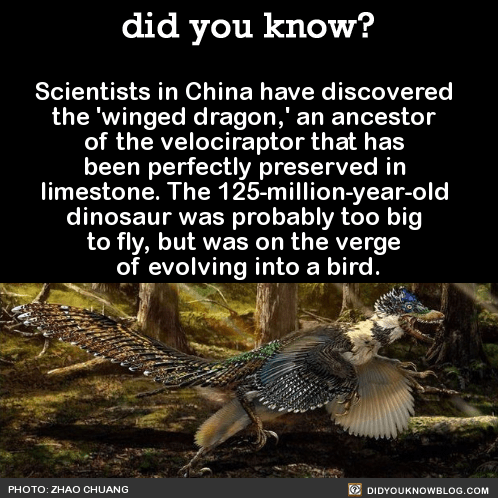
    Lead researcher Dr Steve Brusatte said it was “the single most beautiful fossil I have had the privilege to work on.”

    “ …It will blow some people’s minds to realise that those dinosaurs in the movies would have been even weirder, and I think even scarier – like big fluffy birds from hell.”

    “So maybe [wings] did not evolve for flight – perhaps they evolved as a display structure, or to protect eggs in the nest. Or maybe this animal was starting to move around in the trees and was able to glide.”

    Dr Bill Sellers from the University of Manchester added these details about the origin of birds. “It doesn’t look like [this dinosaur] could fly, although that needs more investigation. “However it does mean that we now know about a huge range of these early bird-like dinosaurs; some species are running around on the ground and some are experimenting with early flight.”

    “[This] gives us a snapshot of what life was like at the earliest stages of bird evolution. China is the epicentre of palaeontology right now. There are [museum] storerooms full of new dinosaur fossils that have never been studied before. This is the most exciting time maybe in the history of palaeontology.”

    Source

    Source: didyouknowblog.com
  • December 7th, 2015

    did-you-kno:

    Lead researcher Dr Steve Brusatte said it was “the single most beautiful fossil I have had the privilege to work on.”

    “ …It will blow some people’s minds to realise that those dinosaurs in the movies would have been even weirder, and I think even scarier – like big fluffy birds from hell.”

    “So maybe [wings] did not evolve for flight – perhaps they evolved as a display structure, or to protect eggs in the nest. Or maybe this animal was starting to move around in the trees and was able to glide.”

    Dr Bill Sellers from the University of Manchester added these details about the origin of birds. “It doesn’t look like [this dinosaur] could fly, although that needs more investigation. “However it does mean that we now know about a huge range of these early bird-like dinosaurs; some species are running around on the ground and some are experimenting with early flight.”

    “[This] gives us a snapshot of what life was like at the earliest stages of bird evolution. China is the epicentre of palaeontology right now. There are [museum] storerooms full of new dinosaur fossils that have never been studied before. This is the most exciting time maybe in the history of palaeontology.”

    Source

    Source: didyouknowblog.com
  • December 7th, 2015

    amonamartha:

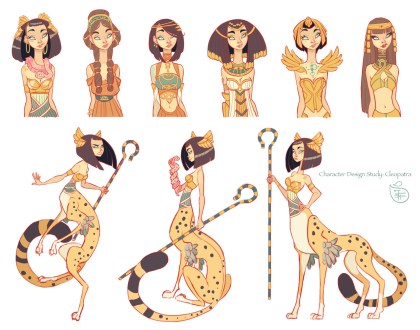
    Fenghuang by TaKe-bamboo

    Source: take-bamboo.deviantart.com
  • Five Things I Wish Someone Told Me Before I Got Published

    November 17th, 2015

    thebookshelfofdoom:

    Getting published is an experience unlike any other, and
    although it’s been a rollercoaster ride of awesomeness, there are some rules of
    the game which I wish I’d known prior to signing on the dotted line.

    1. It’s
    OK to argue with your editor.
    Encouraged, even. Your editor has one job: to
    make the story better. Naturally, the author wants this too, which means
    disagreements are bound to arise. An editor who lets just anything slide isn’t
    doing their job, but at the same time, the author should have major influence.
    Arguing means both sides are passionate, and that’s awesome. Think of it as like a stellar
    collision: when two stars are pulled into each other’s gravitational fields and
    collide at sufficient speeds, their collective awesomeness coalesces. Out of
    this exploding nebula of extra-terrestrial excellence, an even brighter, bigger
    star emerges. Pretty cool, huh?

    2. You’re
    allowed to be embarrassed.
    It’s a natural reaction to people’s amazement. “You wrote a book?” friends and family
    exclaim, delighted. You want to refute – less out of modesty than just sheer
    awkwardness – but they’re having none of it. Everyone is super happy for you,
    which is nice, of course, but sometimes, their happiness makes you want to curl
    up under a rock somewhere. Writers are solitary creatures, after all. We dwell
    in the shadows cast by the light of our computer screens, entertaining
    ourselves with thoughts of strange and horrible things happening to the people
    in our heads. (Note: no, we don’t need to be institutionalized.)

    3. Marketing
    is hard… and doesn’t necessarily work.
    I’m the sort of author who doesn’t
    mind the odd cover reveal or book tour, but coordinating interviews and guest
    spots is a mammoth task in itself. And there are no tangible rewards, either,
    since it’s impossible to know the reasons behind readers purchasing your book.
    Was it because they liked the cover? Or were they enchanted by the interview in
    which you gushed about your Celine Dion obsession? Who knows. It’s all part of
    building your brand, though, which is why I hired a publicist to organize the
    release day blitz for UNTOUCHABLE.

    4. Bad
    reviews aren’t the end of the world.
    I suppose I can’t really talk. The
    lowest review I’ve gotten is four stars, though I’m anticipating an end to the
    streak any day now. Why? Every author – seriously, every single one – gets lacklustre reviews. It’s nothing to be ashamed
    or upset about. As a matter of fact, I don’t mind bad reviews provided they’re
    constructive and offer suggestions. As writers, we’re always improving our craft,
    and reviews allow our most important critics – readers – to help us do just
    that. Got a bad review and want to feel better about it? Just head over to
    Goodreads, click on your favourite book and scroll down til you find the
    inevitable one-star and two-star reviews. It just goes to show that it’s
    impossible to please absolutely everyone. (Also, whatever you do, never respond to bad reviews. For that
    matter, don’t even respond to wonderful ones. It’s unprofessional and kind of
    stalkerish.)

    5. It’s
    OK to be dissatisfied.
    I used to think getting
    an acceptance meant a publisher arriving in a helicopter, six-figure contract in
    hand. Nowadays, I realise how crazy I was. Most writers dream of publication
    their entire lives, and when it finally happens, it can be depressingly anti-climactic.
    That’s fine. Just remember to be grateful for the little milestones – like getting
    to see your cover for the first time. Or hearing the delighted squeals of
    readers who received an ARC. Or even just noticing a spike in your Amazon
    rankings. These are things that all authors get to experience, not just the Big
    Six elite.

    And don’t forget: at the end of the day, you have the privilege of calling yourself an author. Embrace it.

  • November 15th, 2015

    jmadorran:

    Working on some new stuff to add to my portfolio. 🙂

    You may remember this character from a couple of months ago. 😉

    Source: jmadorran
  • November 12th, 2015
  • Keep your butt to yourself, sir.

    November 4th, 2015

    whenyouworkatamuseum:

    Anonymous submitted: 

     We had a visitor write an angry review about our historic house museum, giving us 2 stars, stating: “It blew, there were tons of chairs but I wasn’t allowed to sit on any of them. It’s great if you like going places where you aren’t allowed to touch anything. WOULD NOT RECOMMEND.“ 

     Sorry you weren’t allowed to put your butt on enough of our stuff.

    __________________

    Editor: This made me think, “What factors actually go in to a 1 or 2 star museum review?” So I drank some whiskey and looked up some reviews of well-known museums on TripAdvisor and Yelp and then I felt the need to drink some more. Of course, everyone is entitled to their opinion and art is very subjective, so some of the low rates reviews I give a pass for personal preference, agree to disagree and all that. Some even felt justifiable, based on staff or communication failures (though those also need to be taken with a grain of salt). However, the reviews below made my eyes involuntarily roll and my hand involuntarily reach for a drink. 

    The Met gets 1 star because, though the art is great, the cafe is too expensive. 

    But the Walters got 2 stars for the same reason. 

    Know what the problem is with the Boston Children’s Museum? There’s WAY too many children there.  

    The National Gallery of Art (US) gets 2 stars for not representing more European artists like European museums do. This is the National Gallery of the UNITED STATES. 

    The Denver Art Museum gets 1 star for making people dizzy.

    MoMA = GARBAGE and this person knows because they are a better artist than all the artists of MoMA.  

    The Art Institute of Chicago Museum got 1 star because parking is too expensive, and no museum is worth expensive parking. 

    The Smithsonian Air and Space Museum gets 1 star for fake monkeys, while the Smithsonian Natural History Museum gets 2 stars for just being full of boring stuffed animals, says this person with terrible spelling skills and no grasp of irony. 

    There’s probably tons more, but that’s when I fell asleep on my couch hugging a bottle of Jack Daniels like it was a teddy bear. 

    The museum I work at (also a Children’s Museum) got bad reviews for having too many exhibits and advertising geared toward children (and said reviewer claimed to have children of their own…) as well as a bad review from someone saying that our security was terrible because they didn’t control other people’s kids from getting in their kids’ way and that the reviewer wouldn’t be returning until we could guarantee that other visitors’ children would be civilized (though, don’t we all wish that they would be)…because we are obviously a day care and we should watch people’s kids for them…

  • Types of Divination

    October 29th, 2015

    occultwonderings:


    ASTROLOGY is divination using celestial bodies: the sun, moon, planets, and stars.

    CARTOMANCY is fortune telling using cards such as the Tarot.

    CLAIRAUDIENCE is “clear hearing” of divinatory information. Parapsychologist generally regard as a form of extrasensory perception.

    CLAIRVOYANCE is “clear seeing” of divinatory information. Parapsychologist generally regard as a form of extrasensory perception.

    CRYSTALLOMANCY is divination through crystal gazing.

    DOWSING or DIVINING RODS are methods of divination where a forked stick is used to locate water or precious minerals.

    NUMEROLOGY is the numerical interpretation of numbers, dates, and the number value of letters.

    OCULOMANCY is divination from a person’s eye.

    PALMISTRY is the broad field of divination and interpretation of the lines and structure of the hand.

    PRECOGNITION in an inner knowledge or sense of future events.

    PSYCHOMETRY is the faculty of gaining impressions from a physical object and its history.

    RADIESTHESIA is the general term for divination using a device such as a divining rod or pendulum. Other forms include “table tipping” which was practiced at the White House in the 19th century, the Ouija board, automatic writing (or superconscious writing), and scrying.

    SCIOMANCY is divination using a spirit guide, a method generally employed by chanelers.

    SCRYING is a general term for divination using a crystal, mirrors, bowls of water, ink, or flames to induce visions.

    TASSEOGRAPHY is the reading of tea leaves that remain in a tea cup once the beverage has been drunk.

    Uncommon Types of Divination

    Keep reading

←Previous Page
1 … 124 125 126 127 128 … 182
Next Page→

Create a website or blog at WordPress.com


Loading Comments...
 

    • Subscribe Subscribed
      • AUTHOR | HISTORIAN | ARTIST
      • Already have a WordPress.com account? Log in now.
      • AUTHOR | HISTORIAN | ARTIST
      • Subscribe Subscribed
      • Sign up
      • Log in
      • Report this content
      • View site in Reader
      • Manage subscriptions
      • Collapse this bar