• About
  • The Moon-Eyed Ones
  • Blog
  • Chapters and Extras
  • Contact

AUTHOR | HISTORIAN | ARTIST

  • Mystical Mondays: Trigrams and the Elements in The Four Gods

    December 10th, 2018

    It’s Mystical Monday time! This week I’ll be going over the trigrams of the I Ching. These and the natural elements are crucial in understanding how the world works in the universe of The Four Gods. Let’s get started!
    image

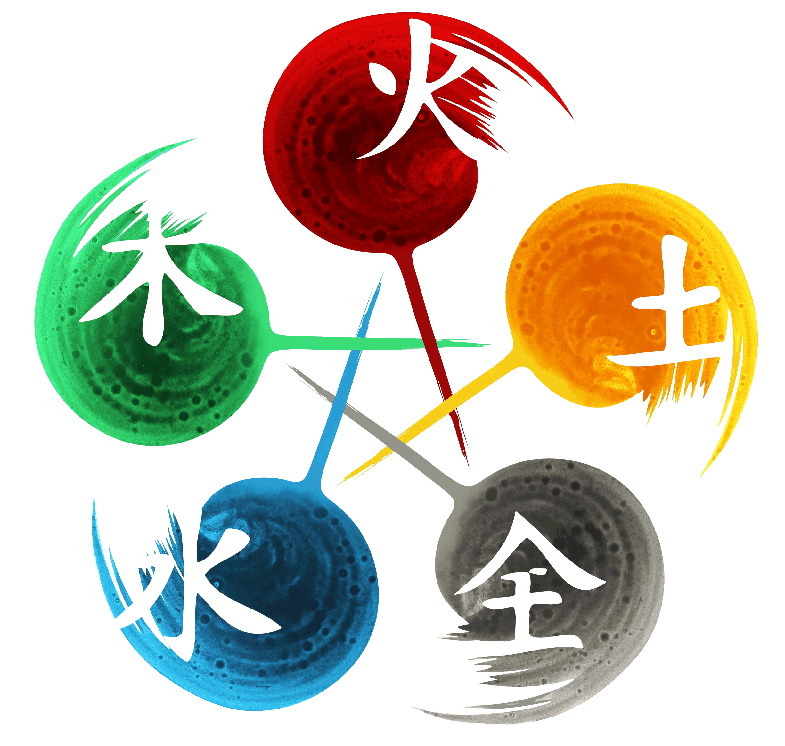
    Firstly, the world is made up of five elements. These elements are fire, earth, metal, water, and wood. These elements react with one another in different ways to create reactions (for example fire burns trees to make earth-> earth produces metals-> condensation can form to metal to become water->and water makes trees made of wood grow, etc.) Elements also have reactions that can destroy one another (another example, water puts out fire, metal chops down wood, fire melts metal, and earth absorbs water). This is the general relationship of the elements that are important for understanding the trigrams and relationships between the gods of the Si Ling. Let’s move on, shall we?


    image

    In The Four Gods: Prince of the North, Gen notices a series of trigrams above each of the gods’ workstations. In the I Ching, these trigrams combine to form hexagrams for divination. When combined, each hexagram has a meaning that can signal the diviner to a possible outcome. Each root of a trigram is a yang line (or a solid line) and a yin line (a broken line), which represents a trait, a situation, and an element of the natural world. These are a little different than the five elements I talked about above, but they have significance in the practical magic used by the gods of the Si Ling. Chonglin introduces Gen to the meaning of the trigrams, and I’ll go into more detail below on the main four used in The Four Gods lore.

    1. Water, or Kan. This is the trigram for the northern direction, as the element for Xuanwu is water. While water represents darkness, this isn’t the darkness of western thought that we’re familiar with. Darkness here doesn’t mean evil, it means mystery or the unknown. Kan also represents risk-taking in forging ahead into that unknown, which is useful when this is present in a divining or for the guidance of a certain protagonist. Note also how water has mostly yin lines. This trigram is also considered a minor yin trigram, rather than a major one.

    2. Fire, or Li. This is for the southern direction and is the polar opposite of Kan. Radiant, passionate, and burning, Li is the powerhouse of the trigrams and represents knowledge and awareness, making it useful to remind us to be more aware of our surroundings, but also that in this journey of learning the future, there may be many things we don’t yet know. Signifying Fengge’s role, it mostly fits him trying his hardest to be Gen’s opposite. This is considered a minor yang trigram.

    3. Thunder, or Zhen. This is used in the Si Ling for the eastern direction and is Longwei’s domain. Zhen is used to put ideas or situations in motion and rolls forward as initiative or an action. In The Four Gods, Longwei is the leader and head of all operations, and thunder represents his initiative to keep the organization alive; this is also a homage to Longwei being a storm dragon. This is considered a minor yin trigram like water, despite the dragon always being a depiction of yang.

    4. Lake, or Dui. This is the trigram for the western direction. Notice how like fire and water, thunder and lake are opposites. While thunder has more yin lines and lake has more yang lines, the western god is actually a representation of yin. Lake represents joy, sensibility, and feeling and denotes Chonglin’s role as not only the voice of reason within the Si Ling organization but the joy that he puts into his work as the organization’s teacher and the stillness he brings to an otherwise very passionate and rambunctious group. This trigram is actually a major yang trigram.

    Two minor yin and one minor and major yang trigrams together balance out to become the force of yin and yang, the essence that exists in everything. Also take notice of how these trigrams are shown being grouped together on the yang side of the taiji symbol, notifying the gods’ role as mainly yang beings. Confused yet? I hope not, but this is crucial in not only understanding the world of The Four Gods but also in how the ancient Chinese saw the world.


    That’s all for this week! Next week I’ll move on to qi and how these elements, trigrams, and relationships add up to make magic in The Four Gods’ universe. See you then!

  • Mystical Mondays: The Moon-Eyed People

    December 6th, 2018

    Hello, all! So I am slowly consolidating my blog onto my website for ease of access. Some of these posts are repeats since they are moving to their new home. (I also know it’s not Monday, but there will be posts every Monday from here on out!) Kicking off the segment, we’re going for a throwback to The Moon-Eyed Ones and its namesake, The Moon-Eyed People from Cherokee myth. Let’s get started!

    image

    The Moon-Eyed People were first mentioned in Western records in 1797, but the best Western source can be found in James Mooney’s 1902 book, Myths of the Cherokee, though Mooney notes that while the tradition of the Moon-Eyed People isn’t extremely detailed, it’s a consistent tradition based on the idea of predecessors in Appalachia before the Cherokee arrived or made their presence dominant in the Southern Appalachians. Western sources disagree as to who these people may have been, as Cherokee descriptions of them mainly note that this group was called “moon-eyed” due to their blue eyes that caused them to see poorly during the day. The Moon-Eyed People were said to be nocturnal due to this, and some ancient stone structures in Tennessee and Georgia are credited to their civilization by the Cherokee. But the question remains: Who were these people?


    Many Western sources say the Moon-Eyed People were early white or European settlers, such as the Welsh, who may have found their way to the Americas before other Europeans began to settle the Appalachians in the 1700s. Other early sources say they may have been Indigenous people with a form of albinism, some say they were a separate tribe who assimilated with the Cherokee, some even say that the Moon-Eyed People were a mythical race of supernatural humans, similar to the Nunnehi (lit. “The people who live everywhere”). Every source does agree, though, Cherokee included, that whoever they were, the Cherokee expelled them from their mountain homes and wiped them out either through war or through cultural assimilation. Still, no one knows for sure who these people were, but theories abound even to this day as to who, or even what, built the stone structures and mounds that populate the forests of Tennessee and Georgia. So how do they tie in to The Moon-Eyed Ones, which takes place in the 1830s, well after the Moon-Eyed People had disappeared?


    image

    Silas is often called “Moon-Eyed” by the Cherokee characters throughout the book, and he is first introduced to the myth through Waya, Amadahy’s brother-in-law. The Cherokee name Amadahy gives him, Nvdodikani (pronounced Nuh-do-di-kahn-i), even means “sun/moon-gazer,” as nvdo is the Cherokee word for both the sun and moon, the only difference is that one is the nvdo for the day, and the other is nvdo for the night. As Silas speaks to Waya and Inola, the matriarch of the Kingfisher family, he asks if he is one of these Moon-Eyed People, because while the myth is vague, it fits his family’s history: the Vanovers and the other Melungeons of Hawktail Ridge were driven from their home to hide in the mountains where no one could find them, not by the Cherokee, but by the settlers of Ellistown.

    Silas also mentions in the book’s opener that his family had been in the mountains after the Cherokee, but before the other European settlers came in from the colonies according to the stories passed down to him by his parents. Either way, Silas also fights the myth of all Melungeons having vivid blue eyes and inhuman traits, something that was used to other Melungeon people from both the whites and Natives of the Appalachians, and is still even used today. Despite the blue-eyed myth being true in his case, the Moon-Eyed People of the book’s universe were an indigenous group, not necessarily foreign settlers from a European expedition. It is hinted that the Cherokee of Cedar Hill often considered their Melungeon neighbors to be descendants of this mysterious tribe, while also recognizing that they were mixed-race individuals that didn’t quite fit in anywhere.

    As far as the title is concerned, it also references the literal meaning of “moon-eyed,” meaning “having eyes wide in wonder,” as Silas and Amadahy go through learning experiences throughout the entire book. Still, no one in Cedar Hill can answer who the Moon-Eyed People really are, and whether Silas and his family are descendants of this group remains a mystery.

  • December 4th, 2018

    changan-moon:

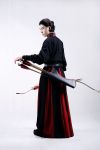
    Traditional Chinese hanfu for archery by 夏雪憶夢

  • December 4th, 2018

    changan-moon:

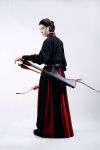
    Traditional Chinese hanfu for archery by 夏雪憶夢

    Source: changan-moon
  • Guide: WQA’s Guide to Internet Research

    December 4th, 2018

    fixyourwritinghabits:

    writing-questions-answered:

    I get a lot of Asks from people who say they Googled their topic but didn’t find anything. Then I Google it and find a ton of resources. I prefer to think that this is because internet research can be daunting, so I am putting together this little guide in hopes of making internet research a little easier.

    Step One – Reduce your topic to the fewest number of words you can and try Googling it. For example, if your protagonist is a fireman, try Googling:

    • Fireman
    • Firemen

    Step Two – Put the information you need into question form and Google it. For example, for your fireman character, you will need to know what it’s like to actually be a fireman. Try Googling:

    • What’s it like to be a fireman?
    • What does a fireman do?
    • What is a fireman’s life like?

    Step Three – Think of different statements that describe the information you’re looking for. For example, if you want to know what it’s like in a firehouse, try Googling:

    • Life inside a firehouse
    • Fireman daily routines

    Step Four – See if there are any alternative words you could use to describe your topic and Google those. For example:

    • Fireman/Firefighter
    • Firehouse/Fire Station/Fire Department
    • Fire Truck/Fire Engine

    Step Five – Search for personal points-of-view by searching for blogs, interviews, forum posts, and experience essays. Using a fireman as an example, you could search for:

    • “Fireman Blog”
    • “Interview with a firefighter”
    • “My experience as a firefighter”

    You can also search for an IamA (I am a…), which is a form of Ask Me Anything on Reddit. IamAs are posted by people with interesting jobs or careers who open themselves up to questions from other Reddit members. Reading through an IamA on your topic (if there is one) is a great way to learn from the personal point-of-view of an expert.

    Step Six – Search for your topic on YouTube. I know it sounds crazy, but just do it. You never know what you might find. Case in point:

    • “Fireman” brought up “Life of an FDNY fireman” as the 12th result.
    • “What does a fireman do” brought up “You can be a firefighter” as the second result.
    • “Life inside a firehouse” brought up “Life in the Firehouse-WFRV” as the first result.

    Now, Let’s Talk About Results:

    When you type a search term into Google, you’re likely to get millions of results. That can be very daunting if you’re not entirely sure what you’re looking for. So, how do you wade through all of that information to find what you’re looking for?

    To start with, you should be able to find enough information to help you within the first three pages of results. As you read down each page of results, just ignore things that obviously don’t pertain to your search, and when you see something that might pertain to your search, right-click on the result and then left-click “open in a new tab.”

    Let’s take a look at what comes up for “fireman”:

    image

    Clearly, we’re not looking for a Little Wayne song, so we can ignore that. Definitions might offer helpful information, but you probably already know the definition of your topic. Images can be helpful, but ignore them unless you need a visual. Wikipedia links, though not always accurate, are always worth opening. The article will give you a helpful overview of the topic—just make sure to double-check any facts you note down. So, one result for the first page isn’t bad. Pages two and three offered a few more worth opening.

    Now, let’s look at the results for “interview with a firefighter”:

    image

    Any search for a career plus “interview” is likely to bring up tips for people who are interviewing for a job in that career. In this case, most of the results on the first page were interviewing tips for prospective firefighters. However, there was one helpful hit—a video interview with a firefighter. That is exactly what we were looking for, so we’ll open up that tab. Once again, pages two and three had a few more links to actual interviews with firefighters as opposed to interviewing tips.

    Once you have three to five tabs open, you can start looking through each one to gather information on your topic. You can jot the notes down in a notebook, or you can open up a Notepad document (just be sure to save it a lot) and jot down your notes in there. It is also helpful to print out articles or interviews if you can, and then use a highlighter to keep track of important information.

    The three most important things you can do when doing internet research are:

    1) Don’t let yourself get overwhelmed by all the information. Just take one result at a time and keep going until you have enough helpful information.

    2) Be patient. While you should be able to find a lot of helpful information within the first few pages of results, sometimes you may need to look at several pages or try several different search terms.

    3) Don’t give up! Research is important to your novel, and you’re really the only one who knows exactly what information you need. It may take hours or even days, but stick with it until you find the information you’re looking for. Sometimes a new search term to try will hit you out-of-the-blue, and that’s the one that brings up all the information you could want.

    Good luck and happy researching!

    THANK YOU SO MUCH

  • December 1st, 2018

    changan-moon:

    羊鷰

  • December 1st, 2018

    changan-moon:

    羊鷰

  • November 30th, 2018

    axolootl:

    trying to write a character smarter than you:

←Previous Page
1 … 31 32 33 34 35 … 182
Next Page→

Create a website or blog at WordPress.com


Loading Comments...
 

    • Subscribe Subscribed
      • AUTHOR | HISTORIAN | ARTIST
      • Already have a WordPress.com account? Log in now.
      • AUTHOR | HISTORIAN | ARTIST
      • Subscribe Subscribed
      • Sign up
      • Log in
      • Report this content
      • View site in Reader
      • Manage subscriptions
      • Collapse this bar