
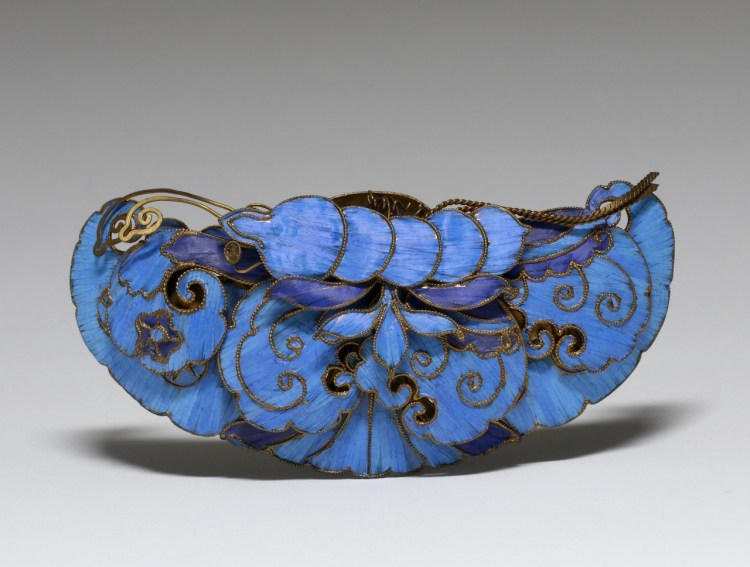
Chinese hair ornament, thought to have been worn by the Empress Dowager Cixi (1835-1908). Made from gilded copper alloy worked into phoenix-shapes, decorated with pearls, other gemstones, and kingfisher feathers. Now in the Walters Art Museum, Baltimore. Photo credit: Walters Art Museum.
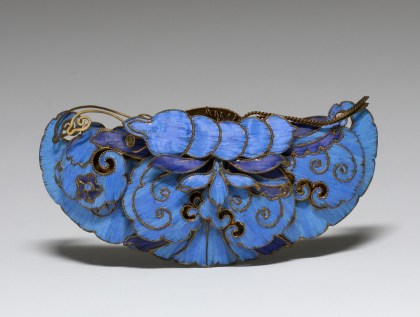
Chinese hair ornament, thought to have been worn by the Empress Dowager Cixi (1835-1908). Made from gilded copper alloy worked into phoenix-shapes, decorated with pearls, other gemstones, and kingfisher feathers. Now in the Walters Art Museum, Baltimore. Photo credit: Walters Art Museum.
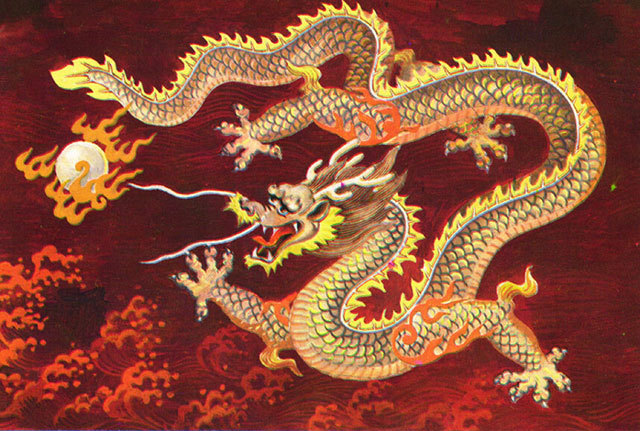
Types of Chinese Dragon
Chinese literature and myths refer to many dragons besides the famous long. The linguist Michael Carr analyzed over 100 ancient dragon names attested in Chinese classic texts. Many such Chinese names derive from the suffix –long:
- Tianlong (Chinese: 天龍; pinyin: tiānlóng; Wade–Giles: t’ien-lung; literally: “heavenly dragon”), celestial dragon that guards heavenly palaces and pulls divine chariots; also a name for the constellation Draco
- Shenlong (Chinese: 神龍; pinyin: shénlóng; Wade–Giles: shen-lung; literally: “god dragon”), thunder god that controls the weather, appearance of a human head, dragon’s body, and drum-like stomach
- Fucanglong (Chinese: 伏藏龍; pinyin: fúcánglóng; Wade–Giles: fu-ts’ang-lung; literally: “hidden treasure dragon”), underworld guardian of precious metals and jewels, associated with volcanoes
- Dilong (Chinese: 地龍; pinyin: dìlóng; Wade–Giles: ti-lung; literally: “earth dragon”), controller of rivers and seas; also a name for earthworm
- Yinglong (Chinese: 應龍; pinyin: yìnglóng; Wade–Giles: ying-lung; literally: “responding dragon”), winged dragon associated with rains and floods, used byHuangdi to kill Chi You
- Jiaolong (Chinese: 蛟龍; pinyin: jiāolóng; Wade–Giles: chiao-lung; literally: “crocodile dragon”), hornless or scaled dragon, leader of all aquatic animals
- Panlong (Chinese: 蟠龍; pinyin: pánlóng; Wade–Giles: p’an-lung; literally: “coiled dragon”), lake dragon that has not ascended to heaven
- Huanglong (Chinese: 黃龍; pinyin: huánglóng; Wade–Giles: huang-lung; literally: “yellow dragon”), hornless dragon symbolizing the emperor
- Feilong (Chinese: 飛龍; pinyin: fēilóng; Wade–Giles: fei-lung; literally: “flying dragon”), winged dragon that rides on clouds and mist; also a name for a genus of pterosaur (compare Feilong kick and Fei Long character)
- Qinglong (Chinese: 青龍; pinyin: qīnglóng; Wade–Giles: ch’ing-lung; literally: “Azure Dragon”), the animal associated with the East in the Chinese Four Symbols, mythological creatures in the Chinese constellations
- Qiulong (Chinese: 虯龍; pinyin: qíulóng; Wade–Giles: ch’iu-lung; literally: “curling dragon”), contradictorily defined as both “horned dragon” and “hornless dragon”
- Zhulong (Chinese: 燭龍; pinyin: zhúlóng; Wade–Giles: chu-lung; literally: “torch dragon”) or Zhuyin (Chinese: 燭陰; pinyin: zhúyīn; Wade–Giles: chu-yin; literally: “illuminating darkness”) was a giant red draconic solar deity in Chinese mythology. It supposedly had a human’s face and snake’s body, created day and night by opening and closing its eyes, and created seasonal winds by breathing. (Note that this zhulong is different from the similarly named Vermilion Dragon or the Pig dragon).
- Chilong (Chinese: 螭龍; pinyin: chīlóng; Wade–Giles: ch’ih-lung; literally: “demon dragon”), a hornless dragon or mountain demon
Fewer Chinese dragon names derive from the prefix long-:
- Longwang (Chinese: 龍王; pinyin: lóngwáng; Wade–Giles: lung-wang; literally: “Dragon Kings”) divine rulers of the Four Seas
- Longma (Chinese: 龍馬; pinyin: lóngmǎ; Wade–Giles: lung-ma; literally: “dragon horse”), emerged from the Luo River and revealed ba gua to Fu Xi
Some additional Chinese dragons are not named with long 龍, for instance,
- Hong (Chinese: 虹; pinyin: hóng; Wade–Giles: hung; literally: “rainbow”), a two-headed dragon or rainbow serpent
- Shen (Chinese: 蜃; pinyin: shèn; Wade–Giles: shen; literally: “giant clam”), a shapeshifting dragon or sea monster believed to create mirages
- Bashe (Chinese: 巴蛇; pinyin: bāshé; Wade–Giles: pa-she; literally: “ba snake”) was a giant python-like dragon that ate elephants
- Teng (Chinese: 螣; pinyin: téng; Wade–Giles: t’eng) or Tengshe (simplified Chinese: 腾蛇; traditional Chinese: 騰蛇; pinyin: téngshé; Wade–Giles: t’eng-she; lit. “soaring snake”) is a flying dragon without legs
Chinese scholars have classified dragons in diverse systems. For instance, Emperor Huizong of the Song dynasty canonized five colored dragons as “kings”.
- The Azure Dragon [Qinglong 青龍] spirits, most compassionate kings.
- The Vermillion Dragon [Zhulong 朱龍] spirits, kings that bestow blessings on lakes.
- The Yellow Dragon [Huanglong 黃龍] spirits, kings that favorably hear all petitions.
- The White Dragon [Bailong 白龍] spirits, virtuous and pure kings.
- The Black Dragon [Xuanlong 玄龍] spirits, kings dwelling in the depths of the mystic waters.














 AUTHOR | HISTORIAN | ARTIST