
Start of Winter 立冬 (Lidong) 7 Nov
立冬 (Lidong) is one of the 24 solar terms under the Chinese lunar calendar and marks the start of winter as its name suggests…

Start of Winter 立冬 (Lidong) 7 Nov
立冬 (Lidong) is one of the 24 solar terms under the Chinese lunar calendar and marks the start of winter as its name suggests…
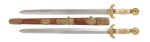
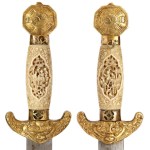
A pair of ivory handled swords, Chinese, early to mid 19th century.
from Peter Dekker’s Mandarin Mansion

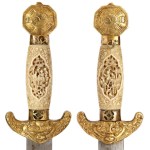
A pair of ivory handled swords, Chinese, early to mid 19th century.
from Peter Dekker’s Mandarin Mansion
(via https://www.youtube.com/watch?v=2wwVlZIk38A)
It’s #FourGodsFriday! This week, I’m deep into NaNoWriMo, so here’s a video about some of the other gods in Chinese mythology that appear in the story among the four main guys.
me, reading my own wips: oh wow i hope the author finishes this
We’re just a few hours away from NaNoWriMo, so I wanted to
share some encouragement before you get started.First of all, stay
calm. It’s the first day, so try to be enthusiastic about it! This should
be fun!Here’s what to expect/how to approach your first day of
NaNoWriMo:Don’t Put Too Much
Pressure on YourselfYou might want to hit all your word counts right away, but
give yourself time to figure it all out. Getting the first chapter down is
difficult and it might take time to find your groove. I usually struggle with
the first words, so don’t be too hard on yourself.Write What You Can
November 1st is a Tuesday, so a lot of us have
stuff to do. We might be busy with class or work, so it’s important to figure
out what time works for you. If you can’t write a lot November 1st,
that’s fine. If you’re loaded up with homework, that’s fine too. NaNoWriMo is
all about time management, so if most of your writing time will get done on the
weekends don’t stress about days with low word counts.Adjust Your Target
GoalsThe 1st week will help you figure out if your
goals are unrealistic. If you tried your best, but didn’t even hit half of your
target word count, readjust your goals! Figure out something that makes more
sense for your schedule/your writing pace. If you work better at night, try to
make room before bed. This is the best time to figure out your most productive
writing style!Reward Yourself
Take care of yourself and treat yourself well during
NaNoWriMo! Reward yourself. Get a good meal, watch one of your favorite movies,
etc. Treating yourself well will only improve your writing and make this month
fun! Punishing yourself or cutting yourself off from the outside world until
you hit impossible goals will only make your miserable.-Kris Noel
Approaching the first day of Camp NaNoWriMo. Join me!
Bringing this back up for the first day!! All of these things still apply!
This week for #FourGodsFriday, I’ll be discussing
architecture of the Si Ling compound. In Chapter 3 of Prince of the North, Gen
notices that the “palace” the Si Ling live and work in is nothing like the
palace he is used to. He describes it as being round in shape with four floors and
one central courtyard/garden area for socializing and for meals. This structure
is based off of the Fujian tulou
structures (although I admit that most tulou
would have been constructed centuries after the time period that Prince of the
North takes place in.) The reason I based the palace off of these fortresses is
because 1) In Chinese myth, Heaven is round and Earth is square, so the round
shape is representative of Heaven, 2) I needed a building that 4 or more people
could live, work, and thrive in without having to run from one end of a
gigantic complex to another (If any of you have seen old Chinese palaces, the
distance between some of the buildings and offices is astounding), 3) Tulou are built to be in accordance with bagua principles, or the eight trigrams that work with the harmony of yin and yang, which fits perfectly for an organization that works in harmony.

Now let’s talk about the tulou
of reality: tulou are earthen
fortresses constructed by the people of Fujian province, mainly the Hakka
people. Once finished, their walls can average about 6 feet thick and they are
known for being earthquake-proof and wind-proof. Many of the tulou of Fujian date back to the 1300 and 1400s (while still
remaining functional, too! Many families still live in these fortresses today).
The largest tulou is around 254 feet
in diameter and most stand at 3 to 5 floors. The most interesting thing about tulou fortresses is that they house
families and people as equals. No section or wing is larger nor more elaborate
than another, and everyone’s private quarters are of the same quality. While
larger groups would have larger sections of the tulou for their family, every family is ranked equally when living
together in the tulou, which is
another reason I wanted to base the Si Ling mansion off of this structure: once
inside, all four men are equals.

As for the Si Ling mansion, the rundown is thus:
There are 4 wings: Qinglong, Xuanwu, Baihu, and Zhuque. Each
wing is color coordinated to match the astrological colors of each sign,
Qinglong is decorated in blues and greens, Xuanwu is decorated in greens and
blacks, Baihu is decorated in whites and golds, and Zhuque is decorated in
reds, pinks, and oranges. The communal areas are situated between the Qinglong
and Zhuque wings, as well as in the center of the palace. They are decorated in violet and burgundy. Each wing (aside
from the communal wing, which is smaller) takes up an equal amount of square
footage of the mansion and each sign owns the four floors within their wing
going vertically from bottom to top.
1st floor- courtyard, kitchens, and dining areas. Private
kitchens and dining rooms are sectioned off for each member, but a communal
kitchen is available off of the courtyard.
2nd floor- offices, studies, pharmacies, and laboratories.
The offices and libraries are on this level, and a public office sits above the
communal kitchen for all four to use if need be.
3rd floor- bathrooms. Bathhouse areas are on this
floor.
4th floor- private wings and bedrooms. All bedrooms are
located on the top level, and although only the 4 members of the organization
live in the mansion at a time, each wing contains up to 4 separate bedrooms for
guests, family, or other deities who may require it.
Observatory- The observatory is a separate building off to
the east side of the mansion and is used for all astrological work.
Like most tulou, the Si Ling mansion only has one gate on
the west side, which leads directly to other buildings in Heaven such as the
Flower House and the palace of the Jade Emperor. Unlike earthly tulou, there is
a main staircase connecting the bedrooms to the courtyard, and this staircase
is located on the inner side of the south wing. However, staircases also link
the other wings to their floors and courtyards, but these are located in the
inner corners of each wing.
An example would be something like this, found in the Zhengchenglou fortress:

That’s all for this week! I’ll be back soon with some updates!
 AUTHOR | HISTORIAN | ARTIST