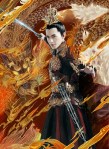
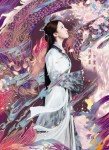
Hey everyone, it’s #FourGodsFriday! Submit any questions you have about The Four Gods universe or the writing process, and I’ll answer them throughout the day!
#repost A favorite quote from #zhuangzi that applies to both writing and the character journeys of #thefourgods
So, this Writing Advice Wednesday segment is not advice at all, but is more of a blog entry. I wanted to do a segment on how to choose an editor, but
life situations and circumstances has driven me to write this blog first,
despite my trepidation on covering this topic. Writing this was stressful for me and even though I am still hesitant about it, I’m posting it anyway. I promise I’ll get back to the
solid advice segments next week!
Now before you keep reading, I want you to understand this
disclaimer: these are my personal experiences and my personal perspective on
what it means to be a writer who is also a WOC. I am not trying to speak for
other POC or even non-POC writers or speak over them. This is my personal truth
and why I have the perspectives I do about my own writing. I don’t expect a gold star or anything special from this, but I needed to get this off of my own chest. With that out of the
way, I’m going to give you a little background on myself and my identity,
because I want you to have a context of where I am coming from.
I come from an interesting family background. My father was
born in South Korea and was adopted at a young age by Americans. He was raised
in rural Kentucky, but his identity is purely American, despite his ancestry
being a mix of Korean, Japanese, Chinese, Ainu, and Mongolian. My mother also comes
from a mixed family, her mother’s side being Scottish and Welsh and her
father’s side was German and Melungeon. Here’s where I come in. I was raised
with the most exposure to my mom’s family growing up. I was aware of my Asian
heritage and have sported it proudly my whole life, as my parents always made sure
I was proud of my roots, but growing up, I had no connection to my Asian heritage in a cultural sense.
But where it gets tricky is that my great-grandmother
(my grandfather’s mother) had a huge impact on the formative years of my
childhood. She identified as Cherokee, as did her mother, and they both passed and were considered Native Americans by their communities. Until I was 11 or
12 years old (which was around the time that she passed away), I identified as
Native American. Even to this day, I still connect with Native American and
specifically Cherokee culture, because that was what I thought I was raised with as a
small child. It was only when I reached my late middle school and early high
school years did I start to feel more connected to my Asian cultural roots, and
also because my peers in school began to make it rather obvious that I was
Asian, so that’s what I began to identify as.
Now fast forward to me being in graduate school. I attended
graduate school in Hong Kong, where I had a bit of a ethnic awakening, if you
will. I realized that I had a unique identity as an Asian-American rather than
just Asian, because to the people of Asia, I was American, despite initial
confusion that I may have been a local at first glance. Also I was beginning to
get serious about genealogy, because being a history major, I found a love for
researching my own family lines and what our place in history was. What I found
was shocking to me. Remember how I said that I identified as Native American
until I was about 12? Well, my genealogy search and a DNA test on my parents
revealed that my great-grandmother was not in fact Native American as she had
claimed, but Melungeon.
Some of you may not know what Melungeon means, so let me
take a minute to explain. Melungeons are a distinct group of people from East
Tennessee, Western North Carolina, and southwest Virginia who are usually a mix
of Western European, West African, and Native American ancestry. My Melungeon
family or “mix” is Western European, West African, Romani, and Powhatan, the
vast majority of that mix being Western European and Romani. Some Melungeon
families are culturally identical to white families of these areas of the
South, while some have cultural tendencies that mirror their non-European roots
that they may have. My family was one of those families, which is why I thought
I was Native American for so long. But how did Powhatan turn to Cherokee? I have no idea, but I can only speculate that somehow Native American or Melungeon got mistaken for Cherokee down the line somewhere and it stuck.
Why is this important? This discovery and the journey I went
on is what inspired me to write The
Moon-Eyed Ones. And it was after this discovery that I felt relieved and
completely free, because Melungeon was a term to describe me. My ethnicity
finally had a name to go with my Asian-American nationality, because until I
was in college, I had no cultural connections to being Asian, but The Four Gods was a story I created at
15 to reconnect with my Asian heritage and grasp the culture I so wanted to
belong to.
Here’s where I’m going to talk about my writing,
specifically The Moon-Eyed Ones and The Four Gods. As a writer who is a WOC,
I find it crucial that my casts of characters are mainly POC. The majority of
the characters in The Moon-Eyed Ones
were Melungeon and Cherokee, and the entirety of the cast of The Four Gods are Chinese (I use Chinese very loosely here, as some characters identify more
as Miao/Hmong, Tibetan, Mongolian, or other ethnicities in what is China today
rather than just Han Chinese, but TFG also focuses on fictional races like Long, Fenghuang, Qilin, etc.)
I consider these two works of mine part of the #ownvoices
movements because while I may not be fully Melungeon or fully Chinese, I do
identify as both Melungeon AND Asian-American. For those of you that don’t know, #ownvoices was a tag created for books that focus on characters that share traits with the author, for instance, the author and the protagonist could share a race, disability, sexuality, gender identity, etc. This movement was created to provide authors a platform to diversify fiction and create characters that represent those that may not be getting the representation they deserve.
And even though the protagonists for these two works are men, they are still stories about struggle, about finding oneself, and
about fighting for justice, their problems are ones that any
gender can at least somewhat relate to. In the big scheme of things, I wanted
there to be Melungeon and East Asian heroes that I so badly needed most of my
life to be out there, so maybe people could connect to them like I wanted to
connect with characters like me.
These are two identities that I wear proudly
and that I have had to fight for. I have been told that I am “basically white”
and have no place in the POC community, that I’m not American or Asian enough.
Just last night I was told by a [white] person that I know and trusted before this that my
experiences as an Asian-American and Melungeon woman aren’t even valid because
certain POC suffer more than me. Writing characters like me gives me a voice,
because even still, I feel like I’ve not been allowed to join the conversation. Even though I’ve experienced racism so much that I’ve
become numb to the pain, I’ve been shunned because my identity and my experiences haven’t been the right kind. Being a WOC writer and writing these characters not only
gives me a voice, but to me, writing is my way of going out into the
world shouting, “You can’t ignore me anymore. I am here and I have a voice, and
I can stand up for what is right, even if you refuse to see me.”
If you’ve read this far, thank you. Four Gods Friday will be back in a few days.
If you want to be successful, you need to market your book before it’s even completed. Here are a few simple things you can do daily to get the word out.
I’ll be honest. I had no idea how much you really need to market your book – before it’s even done! I was actually very naïve about the entire writing to publishing process before I decided I wanted to be an author. But the second I made that decision, I was all over the Internet doing research – another thing all aspiring authors should do before their book is completed.
I Googled the shit out of the different avenues of publishing and once I decided self-publishing was definitely for me, I narrowed my searches. And guess what?
I was basically clueless about how much work I’d really need to do.
Obviously, this didn’t deter me. It was just an eye opener. I learned that becoming an author isn’t just about the writing. It’s a business. And all businesses need great marketing in order to succeed.
Why you need to market your book before you’re done writing it.
I think it’s actually less about marketing your book as you’re writing it and more about marketing yourself as a writer in general. There are a lot of people out there who don’t see the point in spending their time marketing their writing.
Those people usually didn’t do their research about the publishing and selling process of being an author and they also probably won’t find much success when their book is released.
Don’t be that person.
You need to market your book as you’re writing it and even during the different stages. Why? Because who the hell is going to buy your book if nobody knows it exists? You need a fan base. You need to build interest and get your name out there.
Without doing this, there won’t be anyone to buy the book you worked so hard to write. You’ll have to rely solely on someone randomly happening across it online and with millions of books out there, those odds aren’t very good.
But how do you market your book when it’s not even done yet?
It seems nearly impossible but I promise it’s not. There’s tons of helpful advice on how to market your book while you’re still in the stages of writing it.
But before we jump right into those details, let’s talk about what you need to do right away when you know you want to be an author. These are a few things I did within the first month or so of deciding I wanted to be an author:
Make social profiles – I’m talking about all the social profiles: Twitter, Instagram, Tumblr, Facebook, Pinterest, and any other ones you can think of. Try to make them all the same name, too. For example, on every single form of social media, my username is BellaRosePope. This is the name I’m going to be published as and, luckily, it was actually available on all platforms. If the name you’re going to use for publication isn’t available by itself, you can try adding things like “YourNameAuthor” or “BooksByYourName.” Any way of keeping it simple and memorable is best.
Make an author website – Yes, you do need a professional author website with a domain name that matches your social handles (preferably). Again, I was lucky that BellaRosePope.com was available to begin with. If you can’t afford to purchase a domain and hosting, you can get free hosting through different website platforms, but it will have the website after your name. For example, if I didn’t buy this domain, my website would read BellaRosePope.wordpress.com. This looks much less professional.
5 things you can do daily to market your book – before it’s done
There really isn’t an all-around checklist you should be following daily. However, I found these methods extremely helpful for me personally and they’re things I do every day or at least once or twice a week to grow my platform and establish myself as a writer.
1. Document your writing process
You can do this on your social platforms or by blogging or even both. I personally do both. When I have something extensive to share or I feel as though I have some tips that have helped me a lot personally, I’ll blog about it and post it on my website (like what you see right now) so I can help others, too.
You can even just post little updates on your social profiles. I find Twitter to be the best place to write short updates about how far I’ve written or if I passed a specific goal I had set. Tumblr is also a great place to post updates, as well.
Here are a few things you can talk about if you’re not sure what to share about your writing process:
New goals you make for that week
Anytime you surpass said goal
When you have a great new idea and want to share how awesome you are (I do this a lot :p )
Updates on edits
Issues you’re having in specific parts
Excerpts of chapters
Questions when you’re having trouble
Songs that inspired specific scenes
Pictures that are reminiscent of your book
2. Get social on Twitter
Twitter is actually a huge hangout for writers in the community. There are tons of them out there just looking for other writers to mingle with. Liking, replying, retweeting, and even messaging different writers can help expand your social network and you may even find new friends or possible critique partners.
But why should you connect with other writers when you want to market your book to readers?
Because writers are readers. I don’t think I’ve ever met or heard of an author who never read or didn’t like to read. Perhaps they’re out there, but the very large majority of other writers love to read.
Not only could they potentially buy your book when it’s published, they may also offer you advice for your writing journey since they’re writers, too.
In order to find other writers on Twitter, just search and use the following hashtags:
#amwriting / #amediting
#writer / #writers
#fantastywriter (that’s for me, you should use #yourgenrewriter)
#writingtips
#author / #aspiringauthor
#writerprobs / #writerproblems
#storyteller
Really, you can use any hashtag that gets the message across that you’re a writer. You can also pick up on hashtag use as you connect with more writers in the community.
3. Follow others in the writing community
Every single day I get on Twitter, Instagram, and Tumblr and I go through the same hashtags listed above and I find writers I think I would get along with. I stalk their profiles and websites and get to know a little bit about them. Then I’ll comment on a few of their things and just connect with them. This is a great way of building your platform base and gaining a following.
4. Join writing events online
A lot of people host daily events for writers, especially on Twitter. These aren’t huge things. More often than not, they’re usually just another writer who posts a theme for the day and you share a piece of your writing based on that and use the appropriate hashtag.
A few that come to mind right away from Twitter are:
You can also find free writing events on Twitter by following @writevent. A number of authors also hold writer chats on different days of the week via their Twitters.
Here on Tumblr, there are TONS of “writer tags” you can participate in if you’re tagged. You can even make up your own and tag other writers. Here’s an example of one I invented (that people really hated – in a good way lol). This allows people to market themselves as a writer while also expanding your reach.
5. Share details about your writing
Do this all over the place. Talk about your book. Talk about the world you created. You can even talk about how you got started writing in the first place. So long as everyone within earshot (screenshot?) knows you’re a writer by what you share, it’ll work.
An author who does a great job of this and building hype for her book in general is Jenna Moreci. She hosts an event here on her Tumblr @jennamoreci every Tuesday called TSCTuesday where she answers your questions about her upcoming book, The Savior’s Champion, and people get PUMPED.
In general, you just need to get the word out that you’re writing a book and will publish it someday. You’ll have more success as an author if people know and remember you.
The most important part of being an author – aside from actually writing the book – is knowing how your market your book. You need people to know who you are and that you have a book in the works. It will build interest and excitement, which will lead to more sales when you finally get published!










 AUTHOR | HISTORIAN | ARTIST