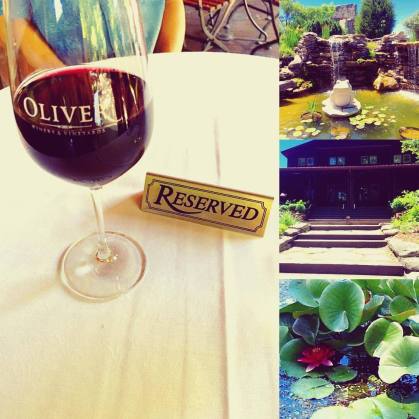
Birthday picnic and day out with the fam. #birthday #winery #writerslife (at Oliver Winery)

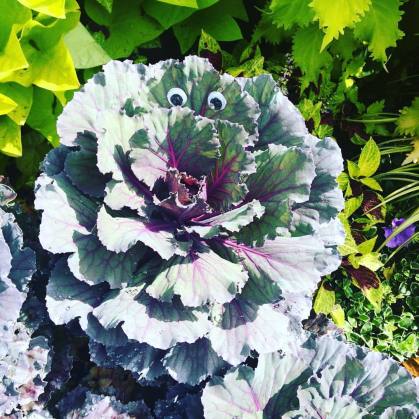
#throwbackthursday to this friend I found while on a trip to Asheville with @mysouthernhart and my roommate. This leafy buddy was in Biltmore Village with a number of other mysteriously googly-eyed plants. 🌱👀🌿 #writerslife #asheville #biltmorevillage #googlyeyesmakeeverythingbetter (at Asheville, North Carolina)

I wanted to take a photo of my altar set up for the first day of spring! I try to meditate in the mornings before I write to get me in the proper state of mind. Green Tara, Saraswati, Ganesh, and Guanyin are still here, and I’ve added a Fenghuang to welcome warmth and the birds back. I’ve put a rose quartz, clear quartz, citrine, and amethyst crystals to channel good energies in (3 out of 4 of these crystals are from the Children’s Museum and remind me of the good memories I had there). Tara is sporting the mala I use for her mantra and the newest additions in the center are a tree incense burner and a goldstone turtle to represent Xuanwu, who I believe protects me and the space, as well as gives me the inspiration needed to write #thefourgods since Gen is based off of him. I hope it’s warmer where you are than it is where I am and that your first day of spring is filled with joy and magic! 🌸💐🌼 #writerslife #firstdayofspring #amwriting #meditation (at Indianapolis, Indiana)
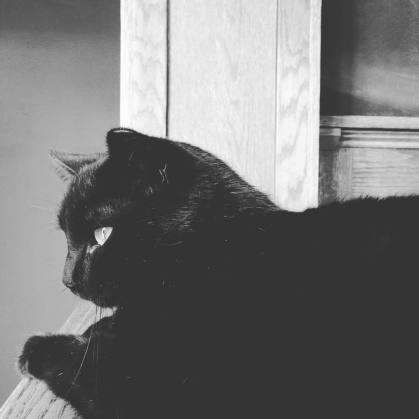
Everyone meet my newest best friend, Leonard. 🐱My roommate and I have been visiting him every weekend. So there’s been a lot else going on. I got a new day job and the new hours have been letting me work on #thefourgods daily, which is great, but I haven’t had the chance to rework my schedule to allow social media time. Hopefully that will change soon! #writerslife #catsofinstagram #busylife (at Pendleton, Indiana)
Happy New Year! Today marks the first day of the Lunar New Year in the US, so I’m going to give a little background on the holiday and how our Four Gods would have celebrated the holiday during the late Eastern Han. Most of you probably recognize the red and gold lanterns, decorations, and firecrackers, but everything in the Spring Festival holiday has a specific reason to its use.
First off, firecrackers were used as early as 200 BC in China, but the reason they are paired with red is because of a mythical monster called the Nian, which some say resembles the lion used in Chinese lion dances today. “Nian” (年) is the same word in Chinese for “year” and every New Year like clockwork, the Nian would emerge from its dwelling to eat nearby children and reign terror on the local people. The people soon learned though that the Nian was afraid of loud noises and the color red, so the next year, the villagers would decorate their houses with red talismans and lanterns and would set off fireworks to frighten the Nian away. To this day, fireworks, red decorations, and lion dances are used by Chinese communities everywhere to usher in good luck for the New Year.
In Gen’s time, these celebrations would be celebrated similarly, but also would stretch around fifteen days, with each day being dedicated to a specific deity or purpose. For example, the first day of the New Year was (and still is) dedicated to one’s elders and family, and a person is expected to visit their loved ones and give gifts, much how we Westerners do around Christmastime. But beware, certain gifts should be avoided. White or black items, clocks, scissors, knives, chrysanthemums, hats, and pears should not be given as gifts during this time, as they are either associated with funerals and death or they will cut off your good luck.
Ancestors that have passed away are also worshipped and paid their due respects during the holiday season, and home altars are cleaned and decorated to allow those gone before us to join in the festivities. Large dinners are held when everyone is gathered together, and staples of the holiday include golden egg rolls, dumplings, whole fish and/or chicken, and noodles. Gold foods represent wealth and good fortune, and chicken or fish are homophones with positive words in Chinese, sounding similar or the same to words for good luck or bringing in prosperity. Chinese culture has customs based all around homophones, and Chinese New Year is a holiday where you can see this custom in full force. Another homophone tradition is to get or make paper hangings with the character for good luck, called “fu” (福) in Chinese. In my house, I always hang my fu upside down, in Chinese it’s called “fu dao,” literally “luck upside down.” While Westerners may think this is a bad thing, “fu dao” also means “good luck has arrived,” so if you hang your fu upside down, it will bring you good luck. I’ve also heard some people say that they character for fu looks like a jar, and if you hang it upside down, the luck will pour out of it into your home and life.
Today, the Chinese New Year is only a public holiday for about five days, but Gen’s family, and the gods alike, would have celebrated it for the full fifteen day span. The gods are said to celebrate the New Year just like we mortals do, as the gods who reside on Earth report back to the Jade Emperor at this time. A huge party is thrown, and the gods gather together to feast and to report their yearly findings on us wee humans that they observed during the year. The god of wealth, the water gods, and the kitchen god are three important deities respected during this time. Today, on the first day, the water gods are to be respected by conserving water. According to tradition, bathing and doing laundry is bad luck today, as not only are you disrespecting the water gods, but you are also washing away any good luck that may come to you. The kitchen god is one of the focal deities, and if you have a statue of this god, it’s tradition that honey or rice syrup is spread across his mouth. The reason for this is that when he ascends to report on your activities over the last year, if you give him honey to eat, he’ll only be able to tell the Jade Emperor the sweetest things about you and your family. The Jade Emperor is celebrated with a massive feast on the tenth day, and throughout the holiday, mainly on New Year’s Eve and New Year’s Day, mythical beasts such as the lion and dragon are celebrated with elaborate dances. Sometimes in other communities like the Hakka, the Qilin dance is also important to scare away evil spirits and bring about good luck. It’s also extremely good luck if one sees a Fenghuang around this time, as they are omens of prosperity, but this is a rare occurrence.
The last day of the New Year is the Lantern Festival. This day is also the god of good fortune’s birthday, but some legends say that the festival was started because of the Jade Emperor’s temper. Legends state that a mythical crane left Heaven and flew down to earth and alighted in a small village. The crane was the Jade Emperor’s favorite companion, and it angered him that the crane was being kept on Earth. He planned to punish the people by setting their village ablaze, but the people were warned by his daughter of what was to come. The people, desperate for a solution, then lit an abundance of lanterns, bonfires, and fireworks to give off the illusion that their town was already in flames. The Heavenly troops were fooled by this illusion, and to celebrate their village being spared, lanterns and fireworks are lit yearly on this day. During Gen’s time, this Festival was of utmost importance along with the New Year itself, as families would light lanterns and make nighttime visits to their respective temples. This holiday was also a fun time for children to solve riddles posted around their temples, but during Gen’s time, this custom was mainly dedicated to the god of the North Star and to bring in light to beckon the coming of spring. This festival was (and is) also celebrated with gala performances, dances, and treats of sweet rice balls. This year, the Lantern Festival falls on March 2nd.
祝贺大家新年好!


 AUTHOR | HISTORIAN | ARTIST