
Here’s something I wish someone had told me when I was a little younger: If you spend more time worrying about being a bad artist than you do actually making art, you’re right. You are a bad artist. If you’re letting the fear of failure or mediocrity…
-
Here’s the Character Creation sheet I mentioned in my Webcomic Beacon interview! ❤
It’s part of my collection of awesome resources I got during my SCAD years. I had to fill this out for Claire when I was first starting out with the comic.
You can copy and paste it, or you can…
-
BASICS:
Genres:
- Alternate World: A setting that is not our world, but may be similar. This includes “portal fantasies” in which characters find an alternative world through their own. An example would be The Chronicles of Narnia.
- Arabian: Fantasy that is based on the Middle East and North Africa.
- Arthurian: Set in Camelot and deals with Arthurian mythology and legends.
- Bangsian: Set in the afterlife or deals heavily with the afterlife. It most often deals with famous and historical people as characters. An example could be The Lovely Bones.
- Celtic: Fantasy that is based on the Celtic people, most often the Irish.
- Christian: This genre has Christian themes and elements.
- Classical: Based on Roman and Greek myths.
- Contemporary: This genre takes place in modern society in which paranormal and magical creatures live among us. An example would be the Harry Potter series.
- Dark: This genre combines fantasy and horror elements. The tone or feel of dark fantasy is often gloomy, bleak, and gothic.
- Epic: This genre is long and, as the name says, epic. Epic is similar to high fantasy, but has more importance, meaning, or depth. Epic fantasy is most often in a medieval setting.
- Gaslamp: Also known as gaslight, this genre has a Victorian or Edwardian setting.
- Gunpowder: Gunpowder crosses epic or high fantasy with “rifles and railroads”, but the technology remains realistic unlike the similar genre of steampunk.
- Heroic: Centers on one or more heroes who start out as humble, unlikely heroes thrown into a plot that challenges them.
- High: This is considered the “classic” fantasy genre. High fantasy contains the general fantasy elements and is set in a fictional world.
- Historical: The setting in this genre is any time period within our world that has fantasy elements added.
- Medieval: Set between ancient times and the industrial era. Often set in Europe and involves knights. (medieval references)
- Mythic: Fantasy involving or based on myths, folklore, and fairy tales.
- Portal: Involves a portal, doorway, or other entryway that leads the protagonist from the “normal world” to the “magical world”.
- Quest: As the name suggests, the protagonist in this genre sets out on a quest. The protagonist most frequently searches for an object of importance and returns home with it.
- Sword and Sorcery: Pseudomedieval settings in which the characters use swords and engage in action-packed plots. Magic is also an element, as is romance.
- Urban: Has a modern or urban setting in which magic and paranormal creatures exist, often in secret.
- Wuxia: A genre in which the protagonist learns a martial art and follows a code. This genre is popular in Chinese speaking areas.
Word Counts:
Word counts for fantasy are longer than other genres because of the need for world building. Even in fantasy that takes place in our world, there is a need for the introduction of the fantasy aspect.
Word counts for established authors with a fan base can run higher because publishers are willing to take a higher chance on those authors. First-time authors (who have little to no fan base) will most likely not publish a longer book through traditional publishing. Established authors may also have better luck with publishing a novel far shorter than that genre’s expected or desired word count, though first-time authors may achieve this as well.
A general rule of thumb for first-time authors is to stay under 100k and probably under 110k for fantasy.
Other exceptions to word count guidelines would be for short fiction (novellas, novelettes, short stories, etc.) and that one great author who shows up every few years with a perfect 200k manuscript.
But why are there word count guidelines? For young readers, it’s pretty obvious why books should be shorter. For other age groups, it comes down to the editor’s preference, shelf space in book stores, and the cost of publishing a book. The bigger the book, the more expensive it is to publish.
- General Fantasy: 75k – 110k
- Epic Fantasy: 90k – 120k
- Contemporary Fantasy: 90k – 120k
- Urban Fantasy: 80k – 100k
- Middle Grade: 45k – 70k
- YA: 75k – 120k (depending on sub-genre)
- Adult: 80k – 120k (depending on sub-genre)
WORLD BUILDING:
A pseudo-European medieval setting is fine, but it’s overdone. And it’s always full of white men and white women in disguise as white men because around 85% (ignore my guess/exaggeration, I only put it there for emphasis) of fantasy writers seem to have trouble letting go of patriarchal societies.
Guys. It’s fantasy. You can do whatever you want. You can write a fantasy that takes place in a jungle. Or in a desert. Or in a prairie. The people can be extremely diverse in one region and less diverse in another. The cultures should differ. Different voices should be heard. Queer people exist. People of color exist. Not everyone has two arms or two legs or the ability to hear.
As for the fantasy elements, you also make up the rules. Don’t go searching around about how a certain magic spell is done, just make it up. Magic can be whatever color you want. It can be no color at all. You can use as much or as little magic as you want.
Keep track of what you put into your world and stick to the rules. There should be limits, laws, cultures, climates, disputes, and everything else that exists in our world. However, you don’t have to go over every subject when writing your story.
World Building:
- Fantasy World Building Questionnaire
- Magical World Builder’s Guide
- Creating Fantasy and Science Fiction Worlds
- Creating Religions
- Quick and Dirty World Building
- World Building Links
- Fantasy World Building Questions
- The Seed of Government (2)
- Guide to Science Fiction and Fantasy
- Fantasy Worlds and Race
- Water Geography
- Alternate Medieval Fantasy Story
- Writing Magic
- Types of Magic
- When Magic Goes Wrong
- Magic-Like Psychic Abilities
- Science and Magic
- Creative Uses of Magic
- Thoughts on Creating Magic Systems
- Defining the Sources, Effects, and Costs of Magic
- World Building Basics
- Mythology Master Post
- Fantasy Religions
- Setting the Fantastic in the Everyday World
- Making Histories
- Matching Your Money to Your World
- Building a Better Beast
- A Man in Beast’s Clothing
- Creating and Using Fictional Languages
- Creating a Language
- Creating Fictional Holidays
- Creating Holidays
- Weather and World Building 101
- Describing Fantastic Creatures
- Medieval Technology
- Music For Your Fantasy World
- A heterogeneous World
- Articles on World Building
Cliches:
- Grand List of Fantasy Cliches (most of this can be debated)
- Fantasy Cliches Discussion
- Ten Fantasy Cliches That Should Be Put to Rest
- Seven Fantasy Cliches That Need to Disappear
- Avoiding Fantasy Cliches 101
- Avoiding Fantasy Cliches
- Fantasy Cliches
- Fantasy Cliche Meter: The Bad Guys
- Fantasy Novelist’s Exam
- Mary Sue Race Test
Note: Species (like elves and dwarves) are not cliches. The way they are executed are cliches.
CHARACTERS
-
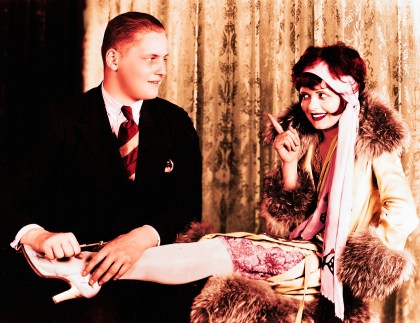
Your Digital Flapper Dictionary
- Terms and Useful Phrases
- That’s bullshit! – Thats all wet!
- I’ve got a shitty date – I’ve got a flat tire
- Don’t be stupid – Don’t be sill
- Move your ass! – Get a wiggle!
- A car you had sex in – Struggle Buggy
- Wasted – Spifflicated (from the words spiffy and intoxicated)
- That Hobo on the corner – That Palooka over there
- Now you’ve got it! – Now you’re on the trolly!
- A Gangsta’s bitch – A Moll
- A slut – A Hotsy Totsy
- I’m Engaged! – I’m Handcuffed
- Beer – Giggle Water
- Legs – Gams
- Boobs – Ninny Pies
- Rich Person – an egg
- The Commen Jerk – A Drugstore Cowboy
- Don’t be a shit head! – Don’t take any wooden nickels!
- That’s fucking awesome! – That’s the Bee’s knees!
- Honey, I said NO – Bank’s Closed, hon
- Holy Shit! – Hot Socks!
- That’s Great! – That’s the Cat’s Pajamas!
- Classy – Swanky
- I need to get wasted – I need to see a man about a dog
- A woman’s Cigarette – A freedom Torch
- That girl is HOT SHIT – That dames got IT
My Homage to an era (the Roaring Twenties) that had no end of wonderful slang, you can add some of your favorites to the list, lets see just how big this Hay Burner (a large object) can get!
- Terms and Useful Phrases
-

THE FAN CHARACTER, THE RECOLOR, THE SELF INSERT. YOU KNOW WHAT IM TALKING ABOUT OF COURSE. THATS RIGHT
-ORIGINAL CHARACTER DO NOT STEAL-
For the entire month of February we celebrate this age old tradition of carbon copying licensed characters the only way we know how; by STEALING EVERYONE ELSES ORIGINAL CHARACTERS
“WHAT?” YOU MAY BE ASKING. “HOW DOES THIS WORK?”
GIVE ME A MOMENT AND ILL EXPLAIN
this is hilarious and i encourage you all to do it.
 AUTHOR | HISTORIAN | ARTIST