
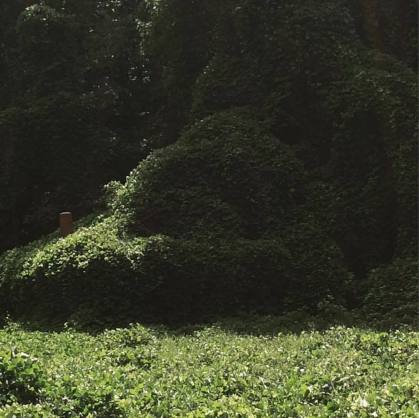
Lake day after a lunch of wood-fired pizza and sangria. :3 #wataugalake #easttennessee #yay #writerslife (at Watauga Dam)

It’s #FourGodsFriday! This week I asked one of my beta readers to help me by contributing her ideas to Four Gods Friday. Here’s what she came up with:
Beta: “You should have Gen have a dream like the one he has in Chapter 1. In this dream, he comes upon the goddess Bobina. She’s wearing a sparkling gold gown and a bad wig. Next to her is her sacred moose. He gives him three challenges he must overcome.”
Me: “What challenges?”
Beta: “1: He must die. 2: He must bring himself back to life. And 3: He must touch the moose.”
Me: “So aside from dying, that doesn’t sound too bad.”
Beta: “But the moose is really fast…and it can climb trees…like a koala.”
Me: “Thanks. I’ll consider it.”
These are the conversations I have with my betas sometimes.
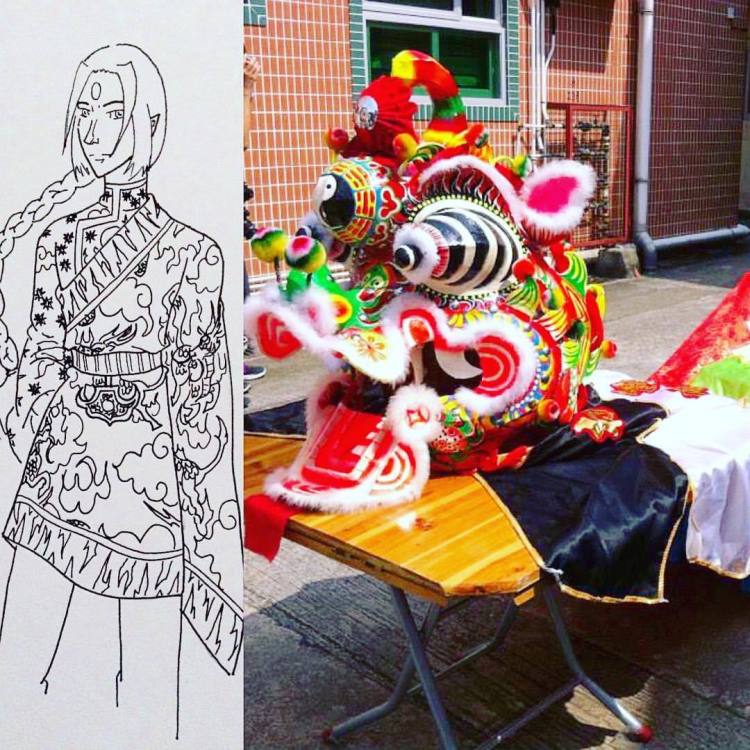
It’s #fourgodsfriday! This week, I decided to do a short mythology lesson. To the left you have Chonglin, one of the four gods of the series. Chonglin is a Qilin (pronounced chee-lin), one of the sacred mythical beasts of Chinese myth and culture. Since a lot of my readers aren’t familiar with Chinese customs, you’re probably asking, “What’s a Qilin?”
Dragons, phoenixes, and gods are familiar to most readers, so I’m going to tell you a little about this creature and why it’s one of my favorites. On the right is a picture I took about 3 years ago in a Hakka village around Tai Mo Shan in Hong Kong. My university department went for a study on historical preservation, and to welcome us, the people did a Qilin dance as a sign of respect and good fortune. Although the Qilin is revered throughout China, its dance is most common among the Hakka people and other southern Chinese cultures. The Qilin is sometimes called a unicorn, but it really isn’t since it usually has two or more horns/antlers, and is more like a dragon-deer-horse than a real horse. It appears before the birth and death of a great ruler and is a seeker of justice. In transitional times, the Qilin comes to earth and punishes the wicked and unjust usually by setting them on fire. Despite this terrifying ability, Qilin are benevolent creatures that wish no harm to come to any living being, and will only punish those who are evil. Its dance and its image are used to drive away demons and bad omens and beckon good fortune.
In #thefourgods Chonglin’s abilities to exorcise darkness and change the destiny of the empire are mentioned frequently. He is the god who helped Gen ascend and acts as his teacher most of the time, as Gen was a wise prince before he became a god. In the original Si Ling mythology, the Qilin was replaced by the white tiger to better suit the imagery. Many Qilin possess stripes, but you’ll notice Chonglin favors tiger stripes. The reason why will be revealed in Book 2. 😉 #qilin #chinesemythology #characterdesign #writerslife
It’s #fourgodsfriday! This week, I decided to do a short mythology lesson. To the left you have Chonglin, one of the four gods of the series. Chonglin is a Qilin (pronounced chee-lin), one of the sacred mythical beasts of Chinese myth and culture. Since a lot of my readers aren’t familiar with Chinese customs, you’re probably asking, “What’s a Qilin?”
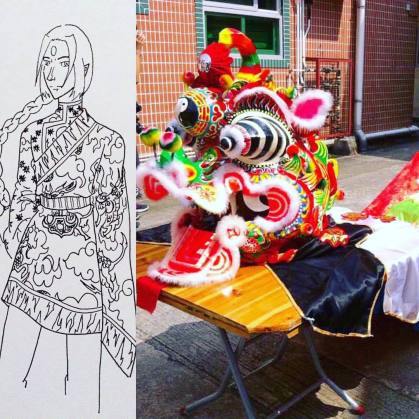
Dragons, phoenixes, and gods are familiar to most readers, so I’m going to tell you a little about this creature and why it’s one of my favorites. On the right is a picture I took about 3 years ago in a Hakka village around Tai Mo Shan in Hong Kong. My university department went for a study on historical preservation, and to welcome us, the people did a Qilin dance as a sign of respect and good fortune. Although the Qilin is revered throughout China, its dance is most common among the Hakka people and other southern Chinese cultures. The Qilin is sometimes called a unicorn, but it really isn’t since it usually has two or more horns/antlers, and is more like a dragon-deer-horse than a real horse. It appears before the birth and death of a great ruler and is a seeker of justice. In transitional times, the Qilin comes to earth and punishes the wicked and unjust usually by setting them on fire. Despite this terrifying ability, Qilin are benevolent creatures that wish no harm to come to any living being, and will only punish those who are evil. Its dance and its image are used to drive away demons and bad omens and beckon good fortune.
In #thefourgods Chonglin’s abilities to exorcise darkness and change the destiny of the empire are mentioned frequently. He is the god who helped Gen ascend and acts as his teacher most of the time, as Gen was a wise prince before he became a god. In the original Si Ling mythology, the Qilin was replaced by the white tiger to better suit the imagery. Many Qilin possess stripes, but you’ll notice Chonglin favors tiger stripes. The reason why will be revealed in Book 2. 😉 #qilin #chinesemythology #characterdesign #writerslife

 AUTHOR | HISTORIAN | ARTIST